Risk-Based Inspection for Emission Control Measures — Setting the Right Inspection Interval
How to apply RBI thinking to seals, IFRs, domes, fittings and vapour systems so that emission performance is managed over the asset life.
Emission control is often managed as a design project: install an IFR, seal, dome or vapour system, calculate the reduction and close the project. The asset then operates for years while its condition changes. That is why emission control also belongs inside the integrity-management system.
Risk-Based Inspection provides a disciplined way to decide what needs to be inspected, how thoroughly and when. For emission control measures, the risk is not limited to structural failure. Loss of environmental performance, regulatory non-compliance, product loss, fire exposure and operational restriction can all be consequences.
1. Code interval and optimum interval are not the same thing
A code, regulation or company standard may set a maximum interval or minimum inspection requirement. That is a boundary condition. The optimum interval for a specific emission-control component depends on degradation rate, consequence, detectability and confidence in the available information.
RBI can therefore justify inspecting some items earlier than the maximum interval. Where a regulatory framework allows RBI to influence an interval, the analysis must meet that framework’s requirements; RBI should never be used as an informal reason to exceed a mandatory limit.
2. Identify the degradation mechanism
| Component | Typical performance threats | What may change before structural failure |
|---|---|---|
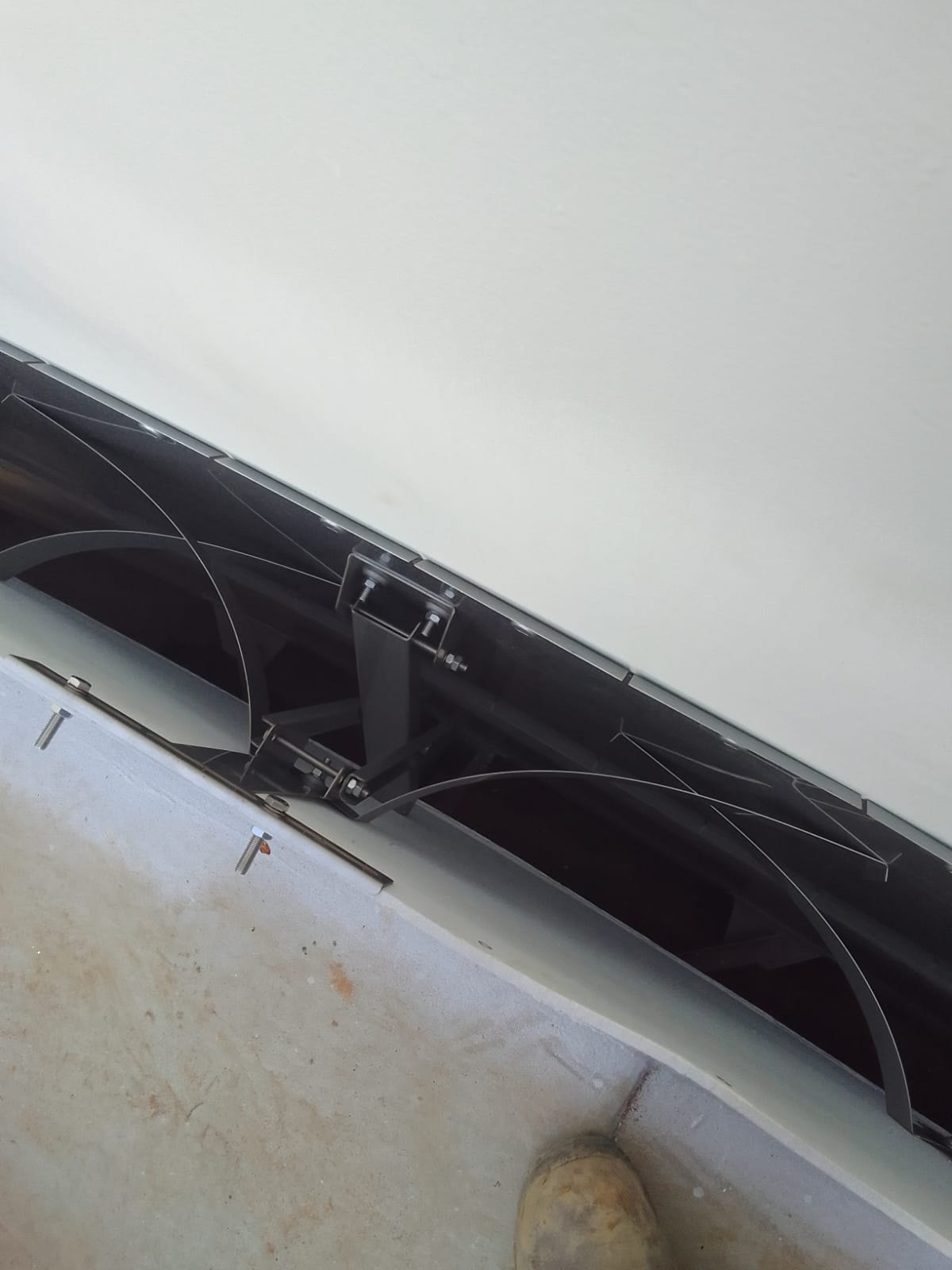
| Rim seal | Wear, loss of spring force, fabric damage, chemical attack, deposits, shell distortion | Gap formation and higher rim-seal loss |
| IFR deck / seams | Joint damage, gasket ageing, fastener movement, distortion, corrosion | Increased connected vapour area or seam loss |
| Deck fittings | Damaged covers/gaskets, misalignment, missing seals, open positions | Direct vapour path |
| Dome | Panel/gasket movement, leakage, support/fastener condition | Weather ingress; changed environment for covered roof |
| P/V device | Fouling, corrosion, seat leakage, incorrect setting | Continuous low-level venting or restricted capacity |
| Vapour system | Leaks, bypass, fouling, control failure, reduced recovery efficiency | Captured vapour released or treatment performance reduced |
3. Define consequence broadly
For an ECM, consequence can include additional VOC mass, hazardous-air-pollutant exposure, odour, permit breach, product loss, fire or explosion risk, damage to the floating roof, unplanned outage and loss of stakeholder confidence. The consequence ranking should reflect the site and product rather than a generic corporate score alone.
A small seal defect on a low-volatility product may have limited environmental consequence; the same defect on a high-volatility or hazardous product can justify rapid intervention.
4. Detectability controls the interval
Some degradation can be detected from outside the tank; other defects are visible only during roof access or tank entry. OGI can reveal certain vapour releases in service, while a deck joint below an IFR may be difficult to assess directly. If a high-consequence failure mode is poorly detectable, a shorter inspection interval or an alternative monitoring method may be justified.
The interval should also reflect the quality of the previous inspection. A recent high-quality survey with measured rim gaps provides more confidence than a brief visual observation recorded as “seal OK”.
5. Add a performance interval
Structural integrity and emission performance do not always deteriorate at the same rate. A rim seal can remain mechanically attached while its gaps increase. A P/V valve can remain functional for overpressure protection while leaking enough to affect the emission inventory.
For critical ECMs, define a performance review interval alongside the structural inspection plan. That review can be as simple as a documented walkdown or as detailed as OGI, gap measurement or a targeted performance test.
6. Connect RBI to the tank outage plan
An emission-control component that needs tank entry should be coordinated with the tank integrity programme. Combining work with planned internal inspections can reduce outage cost and avoid repeated gas-freeing and entry. Conversely, an obvious high-emission condition should not wait years simply because the next internal inspection is distant if it can be addressed in service.
The programme therefore needs both in-service and out-of-service inspection strategies.
7. EEMUA 159 and API 653 as the integrity backbone
EEMUA 159 Edition 6 and API 653 provide the broader integrity framework for aboveground storage tanks. EEMUA 159 explicitly links inspection and maintenance planning to risk-based approaches and treats degradation, settlement, inspection data and fitness-for-service as connected decisions.
The emission-control layer should use that integrity information. Shell settlement and roundness, for example, are not just structural data; they can explain a changing rim gap and deteriorating seal performance.
8. Minimum RBI record for an ECM
- Function and intended emission-control performance.
- Relevant degradation mechanisms and service conditions.
- Current condition and date/quality of last inspection.
- Probability and consequence ranking with basis.
- Detectability and available in-service monitoring.
- Applicable mandatory inspection limits.
- Next inspection date, method and trigger for earlier action.
- Required repair/verification criteria and responsible owner.
9. The outcome is a living interval
The inspection interval should change when evidence changes. Good inspection results can increase confidence; repeated seal damage, product change, abnormal roof movement, a major settlement finding or OGI evidence can reduce it. RBI is therefore a feedback system, not a one-time calculation.
References and technical basis
- EEMUA 159 — Above ground flat bottomed storage tanks: inspection, maintenance and repair
- EEMUA — Storage tanks guidance and training; Edition 6 of EEMUA 159 released 3 April 2025
- American Petroleum Institute — API 650 publication updates / current-edition notices
- US EPA — Appendix K optical gas imaging technical requirements
Standards and regulations change. Confirm the edition, legal applicability and permit conditions for the tank, product and jurisdiction before design or compliance decisions are made.