
Full-Contact and Non-Contact Internal Floating Roofs
Internal floating roofs are often grouped together in specifications and emission calculations, yet the source material shows that full-contact and non-contact roofs work in fundamentally different ways. A non-contact roof…
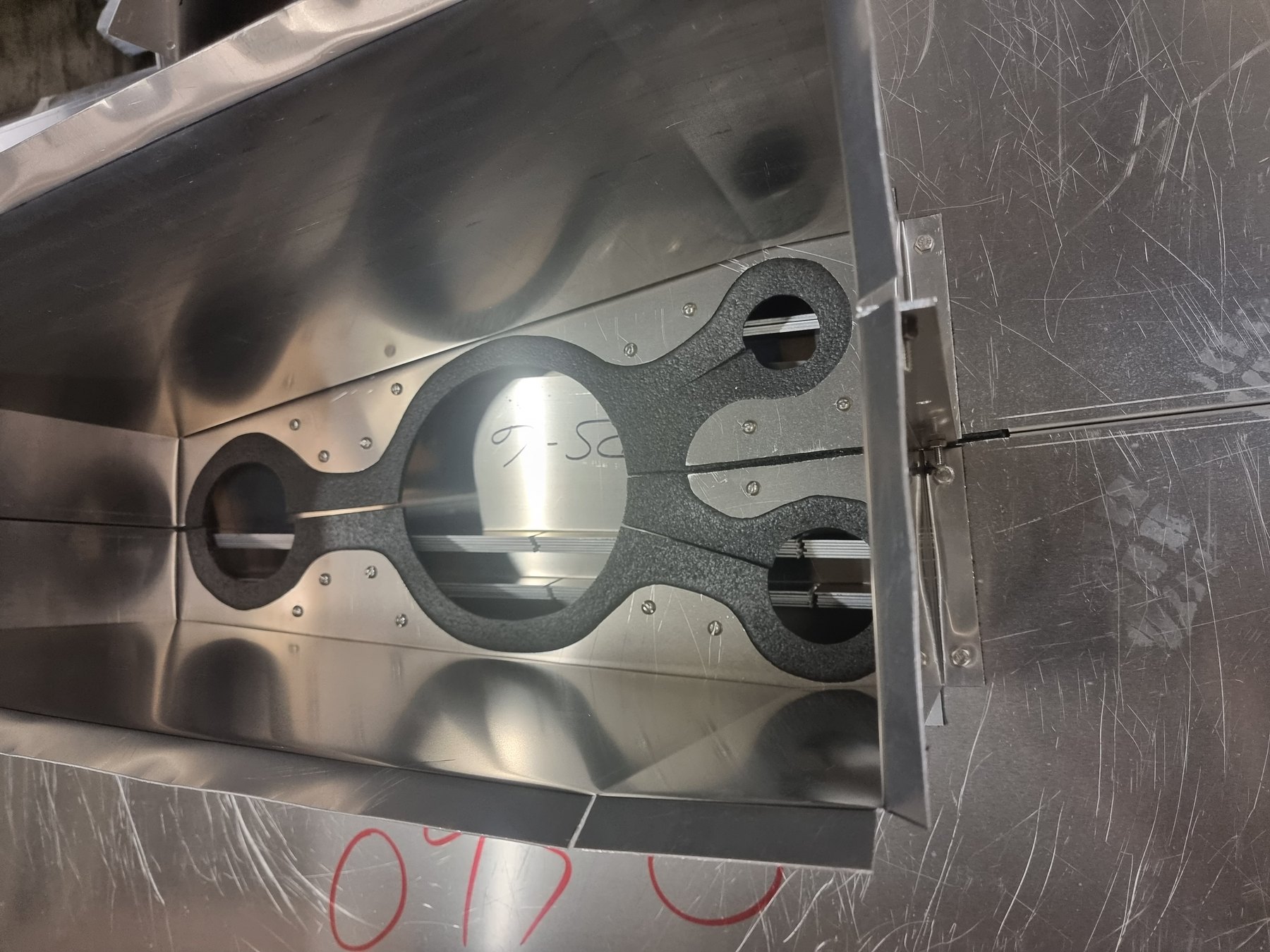
Two different emission-control principles that should not be evaluated as if they were the same technology
Internal floating roofs are often grouped together in specifications and emission calculations, yet the source material shows that full-contact and non-contact roofs work in fundamentally different ways. A non-contact roof contains vapour that has already formed beneath the deck; a full-contact roof seeks to prevent most vapour formation by removing the free vapour space beneath the deck. That distinction affects the significance of deck seams, fittings, rim details, buoyancy, inspection and the interpretation of calculated emission factors.
Key points
- Roof classification should start with the physical emission mechanism, not the material or marketing name.
- For full-contact roofs, the amount of deck area genuinely in liquid contact is a central performance characteristic.
- Non-contact roofs can be highly effective, but vapour-space containment and the sealing of all escape paths become especially important.
- Rim zones, appurtenances and structural members can create non-contact areas even in roofs described as full contact.
- Emission calculations and acceptance criteria should reflect the actual roof configuration rather than a generic roof category.
Why the distinction matters
The primary purpose of an internal floating roof is emission reduction. The source papers repeatedly show that it is not enough to ask whether a tank has an IFR; the relevant question is how the roof controls evaporation and where vapour can still be generated or escape. Treating all aluminium IFRs as equivalent obscures the design details that determine real performance.
Recognition before calculation: first identify where vapour can form and where it can escape. Only then select the applicable emission factor or test method.
The non-contact principle
A skin-and-pontoon or other non-contact roof floats above the liquid on discrete buoyant elements. Vapour can exist beneath much of the deck. Once this vapour space approaches saturation, further evaporation is reduced, but any leakage path disturbs that equilibrium and can cause renewed evaporation over a comparatively large liquid surface.
This makes deck seams, penetrations, rim sealing and other openings important because they are not merely local gaps: they can communicate with a wider vapour space beneath the roof.
The full-contact principle
A genuine full-contact roof is intended to keep the deck in direct contact with the stored liquid over nearly the entire plan area. The source material describes panel-to-panel designs as particularly effective where structural members do not create large dry strips between panels. In this configuration, the exposed liquid area is concentrated at seams, fittings and the rim rather than beneath the whole deck.
The practical implication is that a small imperfection in a seam still matters, but the physical evaporation area feeding that imperfection can be far smaller than for a non-contact roof. This is why the same deck-seam factor can have very different significance depending on roof architecture.
Classification is a design question
The source evaluation of a honeycomb-type roof demonstrates the danger of using the label ‘full contact’ too loosely. The review identified substantial non-contact areas at the rim and structural zones and therefore questioned whether the roof should be treated as full contact for emission calculations.
A useful purchaser review should therefore quantify the non-contact area and examine the rim, cross-members, penetrations and transitions. Classification should follow the geometry actually supplied.
Design features that change performance
- Panel-to-panel spacing and the presence or absence of girders between buoyant modules.
- The sealing method at panel joints, including whether long-term performance depends on field-applied caulking.
- Rim construction and whether the rim zone is liquid-contact, gasketed and mechanically supported.
- Penetration details for stilling wells, gauge poles, manways and other fittings.
- Ability to inspect, pressure-test or otherwise verify buoyant compartments and joints.
- The working range and immersion of the rim seal under actual tank geometry.
Lifecycle performance
A roof can meet its intended geometry at commissioning and still lose performance in service. Seal wear, caulk ageing, corrosion, deformation, changes in tank roundness and operational events can create new vapour paths. The source programme therefore supports treating IFR performance as a lifecycle integrity issue rather than a one-time design declaration.
Inspection should focus on the mechanisms that can change contact area or open vapour paths: seam condition, joint movement, rim gaps, penetrations, buoyant modules and local damage.
Selection logic
Where very low emissions are required, a purchaser should compare roof types on exposed-liquid area, seam design, fitting design, rim performance, testability, buoyancy margin, maintainability and the ability to verify performance after years in service. The lowest theoretical loss factor is not necessarily the best predictor of long-term performance if it depends on difficult field workmanship or uninspectable details.
Conclusion
Full-contact and non-contact IFRs are not variations of one identical technology. They manage vapour by different physical mechanisms. A credible technical evaluation should therefore begin with roof architecture and actual liquid-contact area, then move to seams, fittings, seals and lifecycle verification. This produces a more meaningful comparison than selecting an IFR by generic classification alone.
Source basis and publication notes
This draft is a supplier-neutral synthesis of the project source material. Supplier-specific claims, branding and proprietary conclusions have been removed or reframed as general engineering considerations. No attempt has been made in this draft to update historical standards or regulatory references beyond what the source material itself states.
Principal source material
- The importance of deck seam loss factors2.docx
- Evaluation Aluminator HFC.docx
- Product Selection and Design Guide HMT.docx (IFR overview and full-contact vs skin-and-pontoon sections)
- Whitepapers.zip — IFR engineering letters and full-contact material selection papers
Before publication: verify current editions and clause references for API, EEMUA, EN, NFPA, PGS and applicable local regulation; confirm any quantitative design limits against the project-specific code basis; and use project photographs only after branding/confidentiality review.