
Aluminium Internal Floating Roofs in Methanol and Ethanol Service
The growing use of alcohols creates recurring questions about aluminium IFR compatibility. The source material does not support a simple “aluminium yes/no” answer. Aluminium is protected by a natural oxide film, but corrosion…
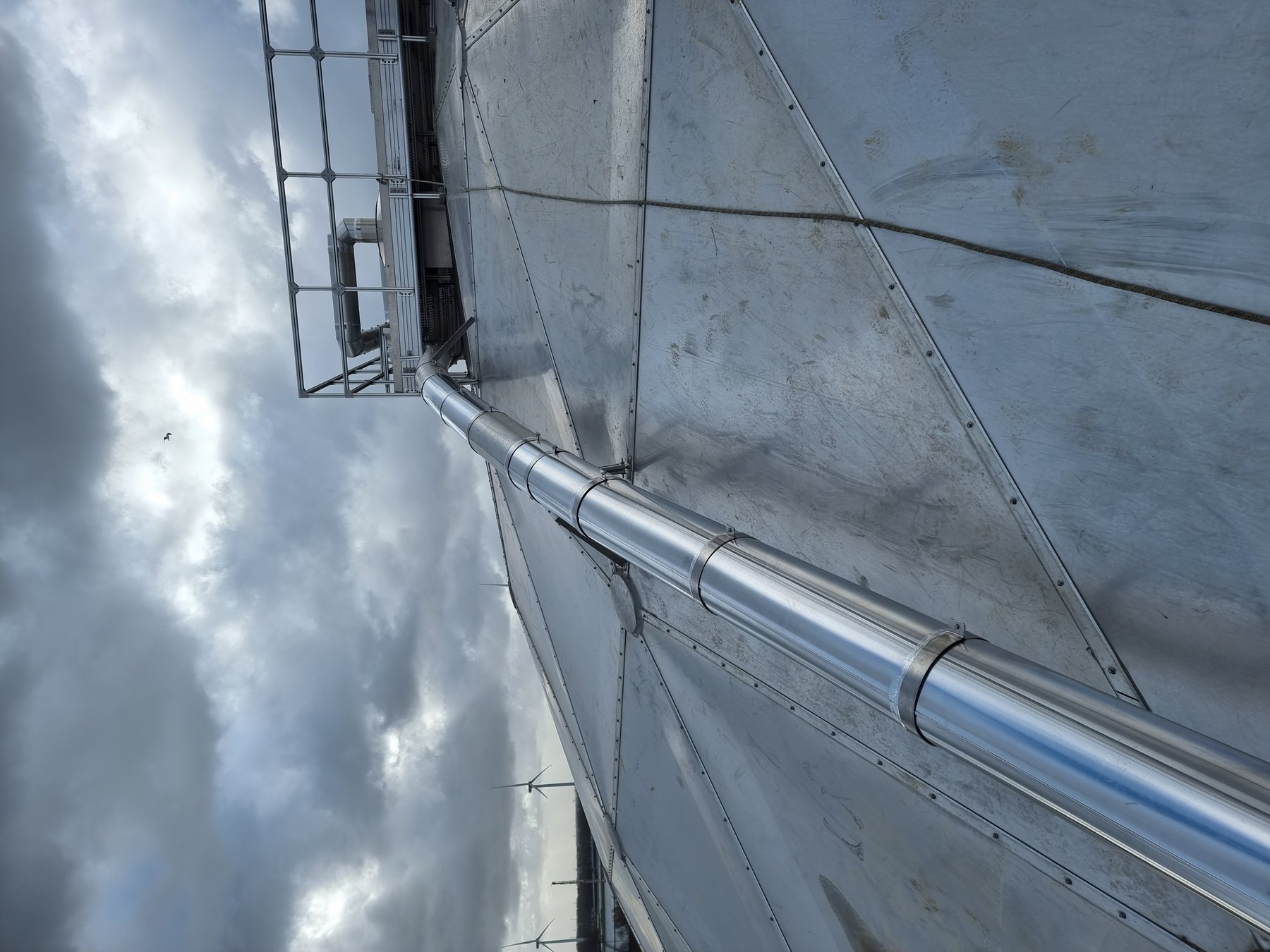
Material selection, corrosion mechanisms and the importance of actual product chemistry
The growing use of alcohols creates recurring questions about aluminium IFR compatibility. The source material does not support a simple “aluminium yes/no” answer. Aluminium is protected by a natural oxide film, but corrosion depends on alloy, temperature, water content, impurities, galvanic couples and roof architecture. Full-contact and non-contact roofs also expose different aluminium areas to the liquid. The right decision therefore requires product data and a material-specific assessment rather than a generic compatibility table.
Key points
- Aluminium normally relies on a stable oxide film for corrosion resistance.
- Alcohol service can become aggressive under particular combinations of water content, temperature and impurities.
- Pitting, galvanic effects, intergranular attack and reported dry-corrosion mechanisms should be considered separately.
- Alloy selection matters; the source material identifies 5xxx-series aluminium as a more corrosion-resistant option for relevant wetted components.
- Compatibility should be reviewed for all materials — aluminium, elastomers, sealants and dissimilar-metal connections.
Why compatibility tables are not enough
A storage product described simply as methanol or ethanol may contain water, chlorides, process contaminants or trace metals that materially change corrosivity. Temperature and the presence or absence of oxygen also matter. A useful compatibility review should therefore use the product specification and expected operating envelope rather than only the product name.
Protective oxide and its failure
The corrosion source explains that aluminium rapidly forms a dense oxide layer in oxygen-containing environments. This layer provides the usual protection. Corrosion begins where the film is destabilised, locally damaged or electrochemically undermined by alloy constituents, aggressive ions or galvanic coupling.
Relevant mechanisms
- Pitting: local attack associated particularly with aggressive ions such as chlorides.
- Micro-galvanic corrosion: local electrochemical cells between intermetallic phases and the aluminium matrix.
- Intergranular corrosion: preferential attack at susceptible grain-boundary regions.
- Galvanic corrosion: acceleration where aluminium is electrically coupled to more noble materials in the presence of an electrolyte.
- Dry-corrosion phenomena reported in alcohol service under specific low-water and temperature conditions.
Roof architecture changes exposure
The alcohol-service paper notes that a non-contact roof exposes a smaller aluminium area directly to liquid, concentrating galvanic or impurity effects into the pontoon contact area. A full-contact roof exposes much more wetted aluminium, but the current density from a given galvanic couple may be distributed over a larger area. This does not make either roof universally superior; it changes the corrosion mechanism and inspection priorities.
Alloy and material selection
The project source specifically discusses AL 5052 as a corrosion-resistant alloy for alcohol service compared with commonly used 3xxx-series sheet in some IFR components. That statement should be verified against current material data and the actual product specification before publication. Elastomers, gaskets, sealants, stainless fasteners and any coating or anodising treatment also require review.
Design and inspection actions
- Obtain water-content range, temperature range and impurity limits from the product specification.
- Identify every wetted aluminium alloy and every dissimilar-metal connection.
- Avoid unintended galvanic couples or electrically isolate them where the design permits.
- Define inspection locations for pitting, crevice zones, welds and dissimilar-metal interfaces.
- Review service changes under management of change; a roof suitable for one alcohol grade is not automatically suitable for another blend.
Conclusion
Aluminium IFRs can be used in alcohol service, but suitability is conditional. The engineering task is to preserve the protective behaviour of the selected alloys within the real product chemistry and temperature envelope. A material-specific review, supported by inspection planning, is more reliable than a generic compatibility statement.
Source basis and publication notes
This draft is a supplier-neutral synthesis of the project source material. Supplier-specific claims, branding and proprietary conclusions have been removed or reframed as general engineering considerations. No attempt has been made in this draft to update historical standards or regulatory references beyond what the source material itself states.
Principal source material
- Whitepapers.zip — Aluminium Internal floating roofs in Methanol and Ethanol service.docx
- Whitepapers.zip — Corrosion of Aluminium Alloys.docx
- Whitepapers.zip — IAV article on aluminium alloys in ethanol fuels
- Whitepapers.zip — IFR chemical compatibility material
Before publication: verify current editions and clause references for API, EEMUA, EN, NFPA, PGS and applicable local regulation; confirm any quantitative design limits against the project-specific code basis; and use project photographs only after branding/confidentiality review.