
Best Available Techniques for Storage Tank Emission Control
How to use BAT as an engineering decision process rather than a catalogue of preferred products.
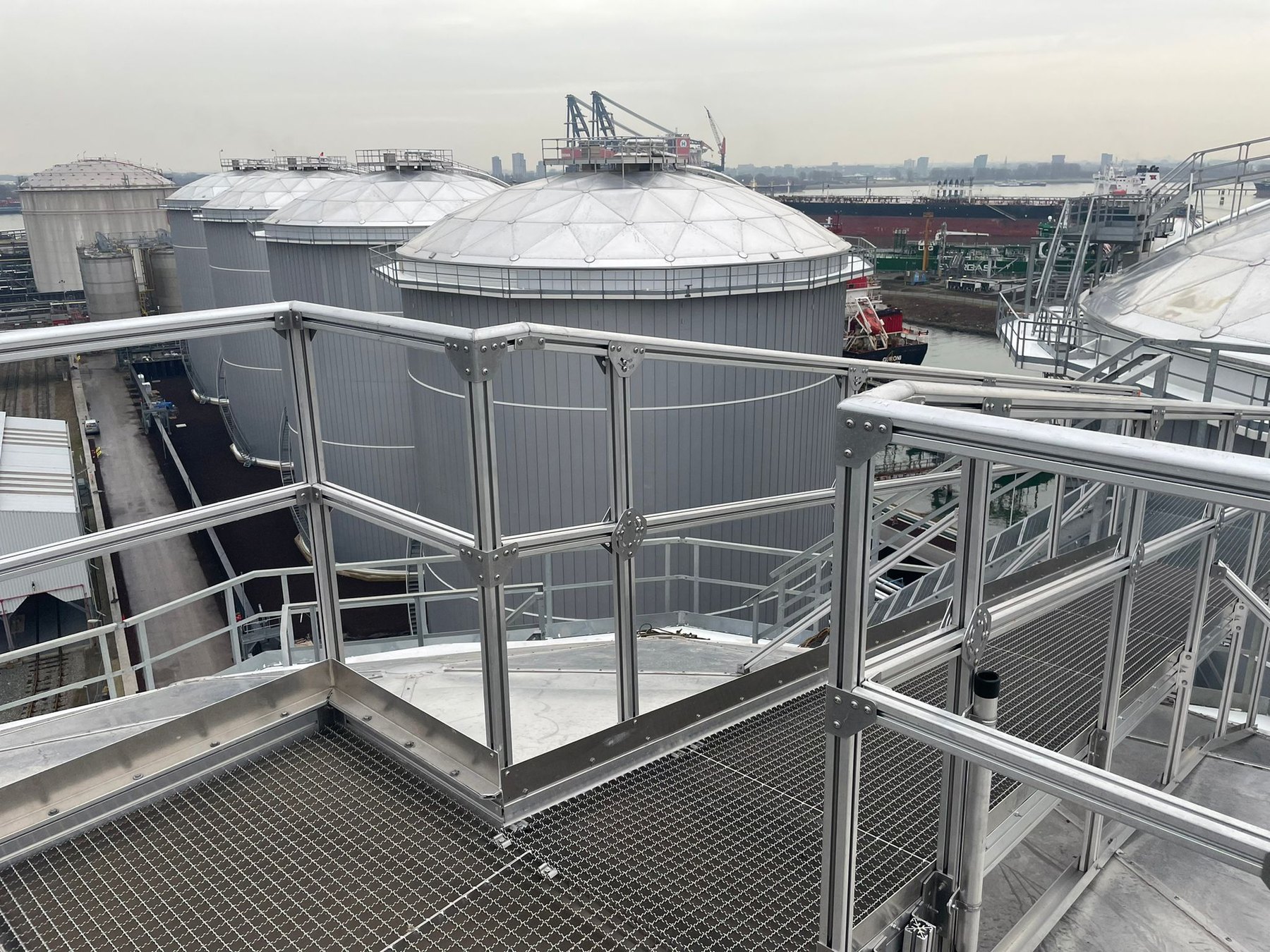
Best Available Techniques is often reduced to a list of equipment that has been accepted somewhere before. That misses the point. BAT is a way of identifying techniques that are technically effective, practically available and appropriate for preventing or minimising environmental impact in a defined context.
For storage tanks, the strongest BAT assessment starts with the emission source and the complete tank system. It should compare prevention, containment, recovery and treatment while accounting for safety, integrity, operability, maintainability and lifecycle performance.
1. BAT is broader than hardware
In the European industrial-emissions framework, techniques include not only the technology installed but also the way an installation is designed, built, maintained, operated and decommissioned. This distinction matters for tanks because the same nominal equipment can perform very differently depending on inspection, operating practice and maintenance.
The European Emissions from Storage BREF remains a cross-sector reference for storage and transfer. It addresses emissions to air, soil and water and covers fixed-roof and floating-roof tank configurations. EEMUA 213 complements that regulatory perspective with storage-tank guidance focused on reducing VOC emissions at source.
2. Start with the emission mechanism
A BAT review should first establish where the emissions originate. For a fixed-roof tank the dominant issue may be working and standing losses. For a floating-roof tank, the dominant sources may be the rim seal, fittings, seams or roof landings. For a closed system, vent handling and treatment reliability may dominate.
This prevents the technology list from becoming the analysis. A dome may be highly valuable on an external floating-roof tank exposed to weather, but it does not replace the need for an effective floating roof and seals. A high-performance rim seal cannot correct an open gauge-pole path. A vapour recovery unit cannot compensate for poor capture design.
3. The BAT hierarchy for tanks
| Layer | BAT question | Examples |
|---|---|---|
| Prevention | Can vapour generation be reduced at source? | Tank concept, product temperature, exposed surface, operating practice |
| Containment | Can remaining vapour paths be closed or reduced? | Floating roof, primary/secondary seals, fitting controls, tight deck joints |
| Capture | Can residual vapour be collected? | Closed vent systems, vapour balance, controlled venting |
| Recovery / treatment | Can collected vapour be recovered or destroyed effectively? | VRU, adsorption, condensation, oxidation |
| Lifecycle assurance | Will the measure retain its performance? | Inspection, testing, maintenance, monitoring, RBI |
4. Technical effectiveness must be demonstrated
A BAT claim should be supported by the physical mechanism, applicable test data or emission factors, a realistic installation condition and an understanding of degradation. Nominal efficiency percentages are weak evidence when the boundary conditions are unclear.
For floating roofs, the assessment should include rim-space range, tank geometry, deck penetrations, seam design, product compatibility and operating loads. For vapour treatment, it should include vapour composition, turndown, peak flow, availability, bypass philosophy and what happens during trips or maintenance.
5. BAT is site-specific but not arbitrary
Tank diameter, throughput, vapour pressure, climate, service criticality, existing configuration, outage opportunity and local environmental sensitivity all affect the practical choice. Site-specific does not mean unstructured. The same decision criteria should be applied consistently across the tank population so that differences in outcome can be explained.
A terminal-wide BAT review is therefore stronger when it uses a common inventory, a consistent calculation basis and an explicit gap assessment rather than treating each project independently.
6. Safety and integrity remain boundary conditions
Emission reduction must not create a new integrity or process-safety problem. Vent restrictions must remain compatible with pressure/vacuum design. Floating-roof modifications must preserve buoyancy, structural capacity, drainage and fire-protection interfaces. Seal modifications must tolerate the actual shell geometry and roof movement.
The best environmental technique is not acceptable if it undermines safe operation. Equally, a safety argument should not be used as a blanket reason to avoid emission reduction when the conflict can be engineered out.
7. Lifecycle BAT
A technique that is highly effective when new but difficult to inspect, sensitive to installation quality or dependent on consumable sealing materials may have a different lifecycle performance from its initial test result. BAT reviews should therefore consider maintainability, inspection access, expected degradation, repairability and the ability to verify performance after intervention.
This lifecycle view links BAT directly to asset integrity and to the RBI approach developed elsewhere in this whitepaper series.
8. Document the decision
A defensible BAT record should state the baseline, the significant emission sources, applicable requirements, techniques considered, expected reduction, assumptions, safety and integrity constraints, lifecycle implications, economics, implementation plan and verification method. The value of the record is that it preserves why the selected solution was judged appropriate—not merely what was installed.
References and technical basis
- European Commission JRC — Emissions from Storage (EFS) BREF, formally adopted July 2006
- EUR-Lex — Industrial Emissions Directive 2010/75/EU, consolidated with Directive (EU) 2024/1785
- EEMUA 213 — Emission reduction from oil storage tanks and loading operations
- PGS 29:2022 version 1.1 (April 2026) — aboveground storage of flammable liquids in vertical cylindrical tanks
Standards and regulations change. Confirm the edition, legal applicability and permit conditions for the tank, product and jurisdiction before design or compliance decisions are made.