
Storage Tank VOC Regulation Around the World — A Comparative Overview
How the regulatory architecture differs between major regions, and why global tank owners need a common technical baseline above local minimums.
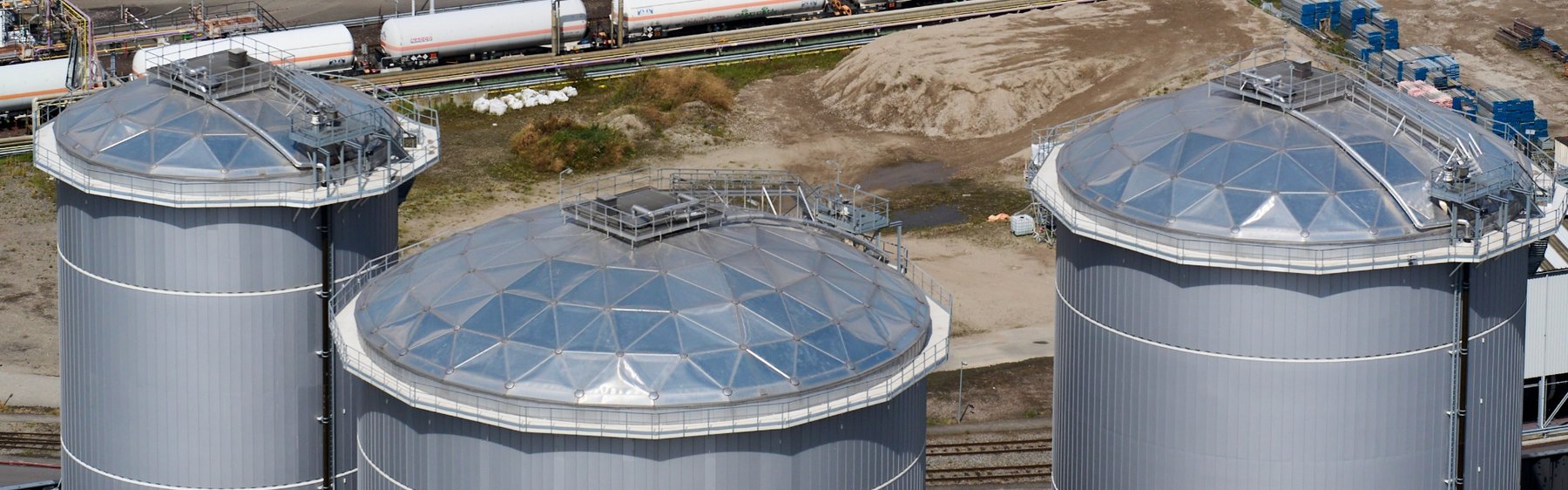
There is no single global rule for storage-tank VOC emissions. Some jurisdictions prescribe tank types, seals, inspections or control efficiencies. Others use permit-based BAT. Some rely heavily on national or local air-quality rules, and many projects combine legal requirements with API, EEMUA or corporate standards.
A multinational owner therefore needs two layers: a consistent technical basis for comparing tanks and a jurisdiction-specific compliance review for every site. This paper provides an orientation, not legal advice.
1. European Union
Large industrial installations may fall within the Industrial Emissions Directive, Directive 2010/75/EU as amended by Directive (EU) 2024/1785. The IED uses integrated permitting and BAT. The Emissions from Storage BREF is the cross-sector reference document specifically addressing storage and transfer techniques, although it was formally adopted in 2006 and should be read alongside current sector BREFs, BAT conclusions and permits.
Petrol has an additional specific EU regime. Directive 94/63/EC addresses VOC emissions from petrol storage and distribution from terminals to service stations. Its scope should not be generalised to every stored hydrocarbon or chemical.
2. Netherlands
Dutch installations operate within the national environmental-permitting framework under the Omgevingswet and related rules, with site permits remaining important. PGS 29 provides a recognised safety framework for aboveground storage of flammable liquids in vertical cylindrical tanks; PGS 29:2022 version 1.1 was published in April 2026.
PGS 29 should not be treated as a stand-alone VOC inventory rule. Emission requirements can arise through environmental rules, permits, BAT assessments and activity-specific obligations. The practical approach is to map safety and environmental requirements separately and then resolve their interfaces.
3. United States — federal
US storage-vessel requirements are highly rule- and applicability-specific. Under 40 CFR Part 60, Subpart Kb continues to apply to certain volatile organic liquid storage vessels with construction, reconstruction or modification after 23 July 1984 and on or before 4 October 2023. Subpart Kc applies to affected vessels for which construction, reconstruction or modification commenced after 4 October 2023; EPA’s final rule became effective on 15 October 2024.
Kc strengthened requirements for VOC control from storage vessels, including floating-roof vessels and vessels using closed vent systems and control. Other federal programmes and hazardous-air-pollutant rules may also apply depending on industry and product.
4. United States — state and local
State implementation plans and local air districts can be more prescriptive than the federal baseline. California air districts and Texas rules are well-known examples of regional requirements affecting floating roofs, seals, fittings and inspection.
For US projects, “API compliant” is therefore never a complete regulatory answer. The facility location, source category, tank construction date, product properties and applicable federal/state/local rules must all be checked.
5. United Kingdom
The UK uses environmental permitting and BAT/appropriate-measures guidance. Environment Agency guidance for VOC control lists measures such as enclosure, capture on vents, vapour balance, floating roofs, pressure/vacuum management and treatment. Separate crude-oil storage BAT guidance requires operators to investigate viable use or abatement of gaseous emissions before accepting atmospheric venting.
The important structural similarity with EU BAT is that technology and management practice are considered together.
6. Australia — example of state-based regulation
Australia does not have one national storage-tank VOC rule equivalent to a single US federal subpart. State and territory requirements are important. New South Wales, for example, regulates volatile organic liquids through the Protection of the Environment Operations (Clean Air) Regulation 2022; expanded control-equipment requirements for storage tanks and loading plant took effect in a wider control area from 1 July 2024.
This illustrates why regional due diligence is essential even where familiar international tank standards are used for design.
7. Middle East, Asia, Latin America and Africa
Across these regions, requirements vary widely by country, emirate/state, industrial zone, environmental permit and project. International design standards are frequently specified on major terminals, but compliance with API or EEMUA does not by itself demonstrate compliance with local air-emission law.
The safe approach is to build a jurisdiction register for each project: competent authority, legal air-emission requirements, permit limits, required calculation method, accepted control techniques, monitoring and inspection obligations, reporting frequency and the adopted editions of external standards.
8. A global owner needs a company baseline
When local rules differ, a common corporate technical baseline prevents environmental performance from falling to the lowest regulatory minimum. The baseline can define the emission inventory method, BAT review process, minimum data quality, inspection philosophy, verification expectations and management-of-change requirements.
Local law then acts as a mandatory overlay. Where local law is stricter, it governs. Where it is less detailed, the technical baseline preserves a consistent level of engineering judgement across the portfolio.
9. Keep regulation controlled by date
Regulation changes more quickly than tank hardware. Every regulatory whitepaper, project specification and scorecard should carry a review date and identify the source authority. A global comparison without revision control becomes unreliable surprisingly quickly.
References and technical basis
- EUR-Lex — Industrial Emissions Directive 2010/75/EU, consolidated with Directive (EU) 2024/1785
- European Commission JRC — Emissions from Storage (EFS) BREF, formally adopted July 2006
- EUR-Lex — Directive 94/63/EC on VOC emissions from storage and distribution of petrol
- PGS 29:2022 version 1.1 (April 2026) — aboveground storage of flammable liquids in vertical cylindrical tanks
- US EPA — New Source Performance Standards for Volatile Organic Liquid Storage Vessels, Subpart Kc
- US EPA — Subpart Kc frequently asked questions
- UK Environment Agency — Control and monitor emissions for your environmental permit
- UK Environment Agency — Storing and handling crude oil: best available techniques
- NSW EPA — Protection of the Environment Operations (Clean Air) Regulation 2022; volatile organic liquids
Standards and regulations change. Confirm the edition, legal applicability and permit conditions for the tank, product and jurisdiction before design or compliance decisions are made.