
Tank Selection, Vapour Pressure and Emission Potential
Why product volatility, operating conditions and tank configuration should be assessed before individual emission-control devices are selected.
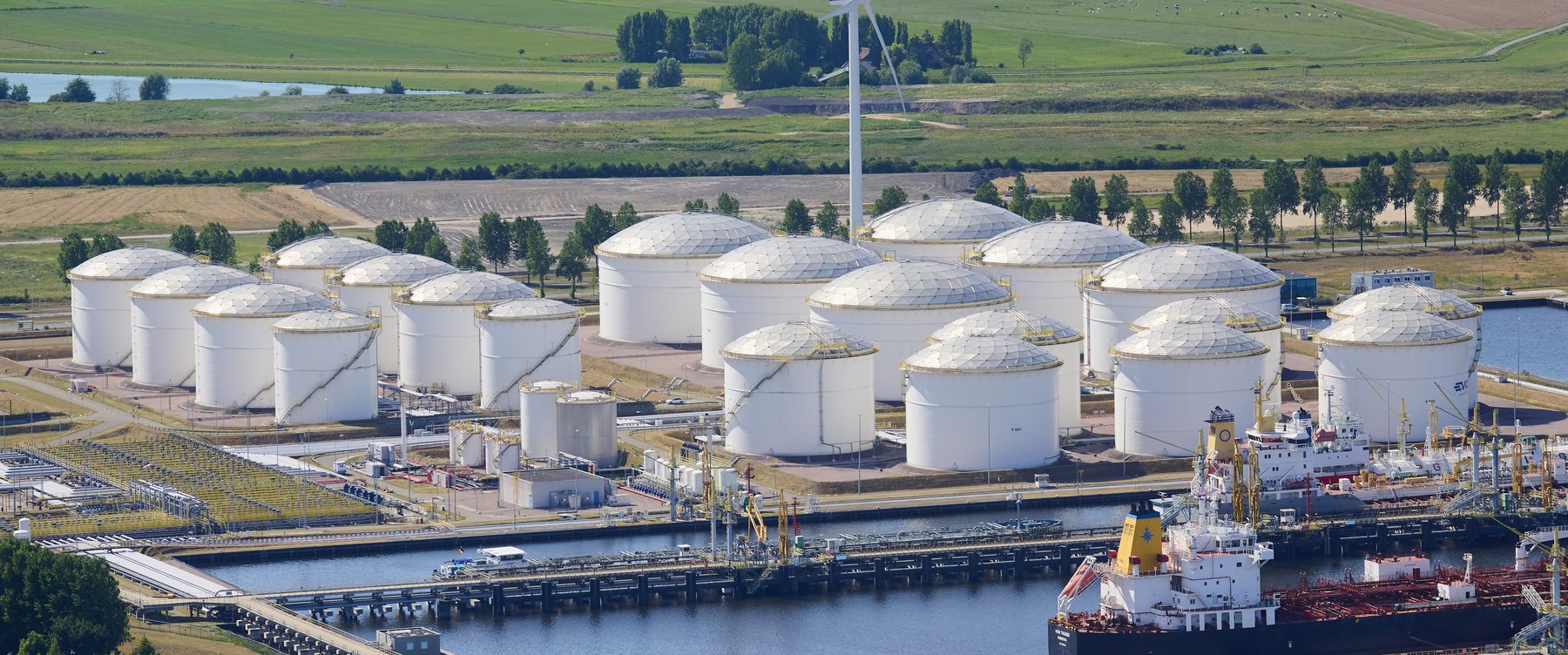
The most effective emission-control decision is often made before a seal, vent or vapour unit is specified. It is the choice of tank concept itself. Product volatility and the operating envelope determine how much vapour can be generated and which control philosophy is technically sensible.
True vapour pressure is therefore a key input, but it should not become a single-number shortcut. Temperature, product composition, throughput, filling conditions, roof landings, pressure management and the consequences of abnormal operation determine whether a nominal tank type is suitable in practice.
1. Vapour pressure is a starting point, not the entire answer
True vapour pressure expresses the equilibrium tendency of a liquid to generate vapour at a specified temperature. As temperature rises, the vapour pressure of most volatile liquids rises as well. For mixtures such as petroleum products, composition and temperature both matter, and product properties can change over time.
Reid Vapour Pressure is a laboratory property used widely for fuels, but it is not interchangeable with true vapour pressure at the actual storage temperature. Emission calculations and tank-selection decisions should use the property required by the applicable method, based on representative product data.
2. Fixed-roof tanks
A freely vented fixed-roof tank contains a substantial vapour space above the liquid. Temperature changes drive expansion and contraction, while filling displaces vapour. Pressure/vacuum settings can reduce unnecessary breathing but must remain compatible with tank design pressure, vacuum capability and operating scenarios.
For lower-volatility services, the resulting emissions may be acceptable or controllable through pressure management, vapour balance or treatment. For more volatile products or high-throughput service, reducing the exposed liquid surface with a floating roof or moving toward a closed vapour system may be more effective.
3. Floating-roof tanks
A floating roof reduces the vapour volume in direct communication with the liquid. External floating roofs do this in an open-top tank; internal floating roofs do it beneath a fixed roof. The residual losses shift toward the perimeter seal, fittings, seams and operational events.
The choice between external and internal floating-roof configurations is not only an emissions decision. Weather exposure, fire protection, inspection access, product contamination, tank geometry, maintenance philosophy and lifecycle intervention all influence the preferred solution.
4. Full-contact and non-contact IFRs
A full-contact internal floating roof is designed so that most of the deck is supported directly by the stored liquid, with buoyant modules or panels forming the deck. A non-contact or skin-and-pontoon roof suspends a vapour barrier above the liquid on discrete pontoons. The resulting vapour geometry and seam behaviour are different.
Neither category should be reduced to a marketing statement. The relevant questions are how much liquid surface remains exposed, how vapour paths are sealed, how penetrations are treated, how the roof responds to tank geometry and operating loads, how it can be inspected and how its in-service condition is verified.
5. Closed and controlled vapour-space systems
Where vapour cannot be sufficiently prevented or contained by tank configuration alone, a closed vent system, vapour balance or vapour treatment system may be appropriate. The decision then becomes a system design exercise involving expected vapour flow, composition, recovery value, pressure/vacuum protection and abnormal cases.
Closing a tank more tightly is not automatically an improvement. The allowable pressure and vacuum envelope, emergency venting and interactions with inerting or fire protection must be understood before vent paths are restricted.
6. Operating conditions change the answer
- Storage temperature and solar heating can change vapour pressure and breathing losses.
- High throughput increases displacement and can increase the importance of fittings and vapour treatment.
- Frequent roof landings can create a non-routine loss that dominates an otherwise efficient floating-roof tank.
- Pigging and gas slugs can introduce transient loads and vapour volumes not represented by normal liquid filling.
- Mixers, columns, gauge poles and other appurtenances create both mechanical interfaces and potential vapour paths.
- A change of product may invalidate the original material-compatibility or emission assumptions.
7. A defensible selection process
A tank-selection study should state the product properties and temperature basis; define routine and abnormal operations; identify applicable legal and permit requirements; compare realistic tank configurations; estimate emissions using recognised methods; check fire, integrity and operability interfaces; and document the assumptions that determined the selection.
This produces a decision that can be revisited when the service changes. It also prevents individual control devices from carrying expectations they were never designed to meet.
References and technical basis
- EEMUA 213 — Emission reduction from oil storage tanks and loading operations
- US EPA — AP-42 Chapter 7.1, Organic Liquid Storage Tanks (final revision October 2024)
- American Petroleum Institute — Subcommittee on Evaporation Loss Estimation, MPMS Chapter 19
- PGS 29:2022 version 1.1 (April 2026) — aboveground storage of flammable liquids in vertical cylindrical tanks
Standards and regulations change. Confirm the edition, legal applicability and permit conditions for the tank, product and jurisdiction before design or compliance decisions are made.