Full-contact deck
Panel layout is developed to keep the deck in contact with the stored liquid over the intended operating area.

Full-contact aluminium internal floating roof
A full-contact IFR designed to reduce the continuous vapour space beneath the deck and make the deck, seams, fittings, buoyancy and rim seal work as one emission-control system.
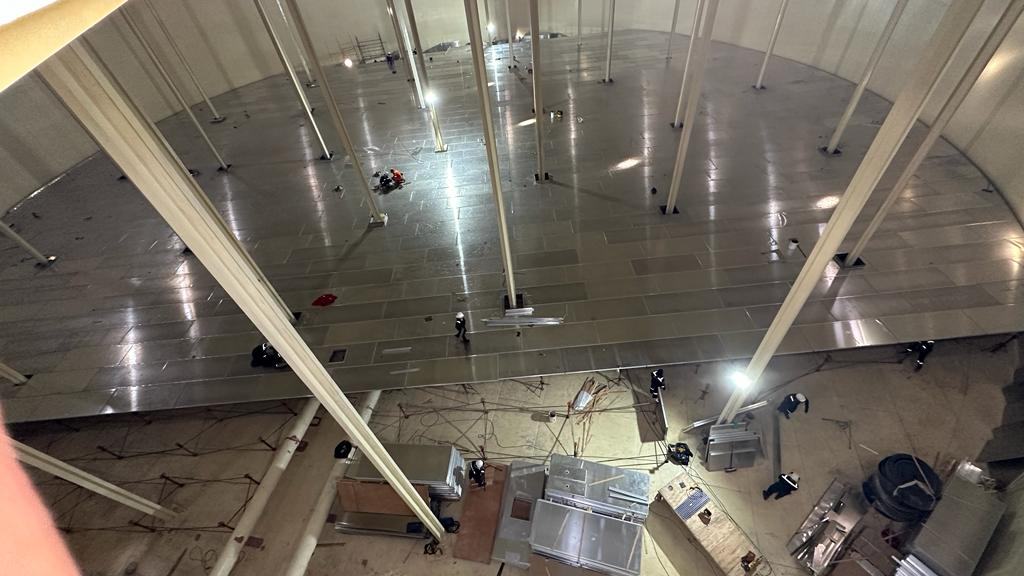
A true full-contact roof controls emissions differently from a skin-and-pontoon roof. The deck is intended to remain in direct contact with the liquid over essentially the usable deck area, greatly reducing the continuous vapour space beneath the roof.
That changes the engineering question. Seam width, local discontinuities, penetrations, rim space and any non-contact zones become more important than a generic roof label. EZroof HC is therefore configured around the actual emission path as well as structural and buoyancy performance.
Archive product photography is used to show the physical deck and fittings rather than rely only on renderings. Current EZroof HC details are project-specific.
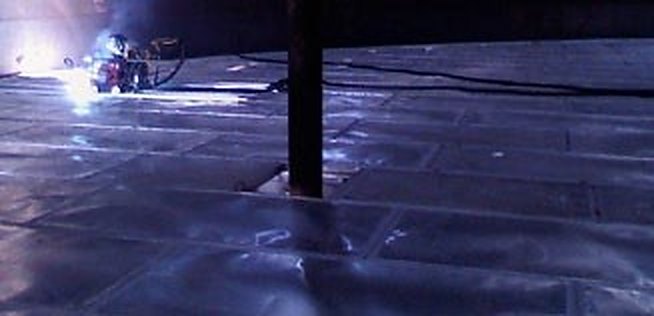
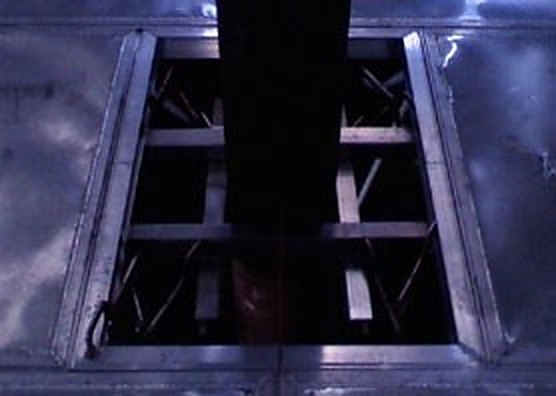
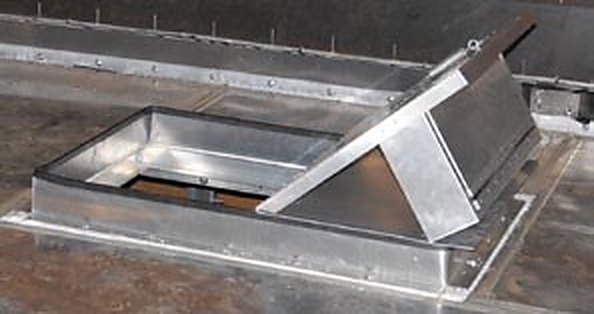
Panel layout is developed to keep the deck in contact with the stored liquid over the intended operating area.
Panel-to-panel connections and gasketed sealing details minimise exposed liquid area and uncontrolled vapour paths.
Buoyant area, openings, local loads and the roof structure are checked together rather than independently.
Rim seal, wells, legs, anti-rotation, vents and penetrations are part of the emissions design.
Typical project engineering references include API 650 Appendix H and applicable material, fire-protection and hazardous-area requirements. Recent full-contact project configurations have used aluminium materials to EN 485 / EN 754 / EN 755 families and project-specific NFPA / ATEX requirements; the final basis is always defined per tank.
Emission Zero can review the application before turning it into a product configuration or project specification.