Independent structure
The deck support system is designed as a structural system rather than relying on pontoons to act as primary beams.

Non-contact aluminium skin-and-pontoon internal floating roof
A deliberately robust non-contact IFR for applications where a skin-and-pontoon concept is the right answer — engineered around independent structure, reliable buoyancy and control of the vapour space beneath the deck.
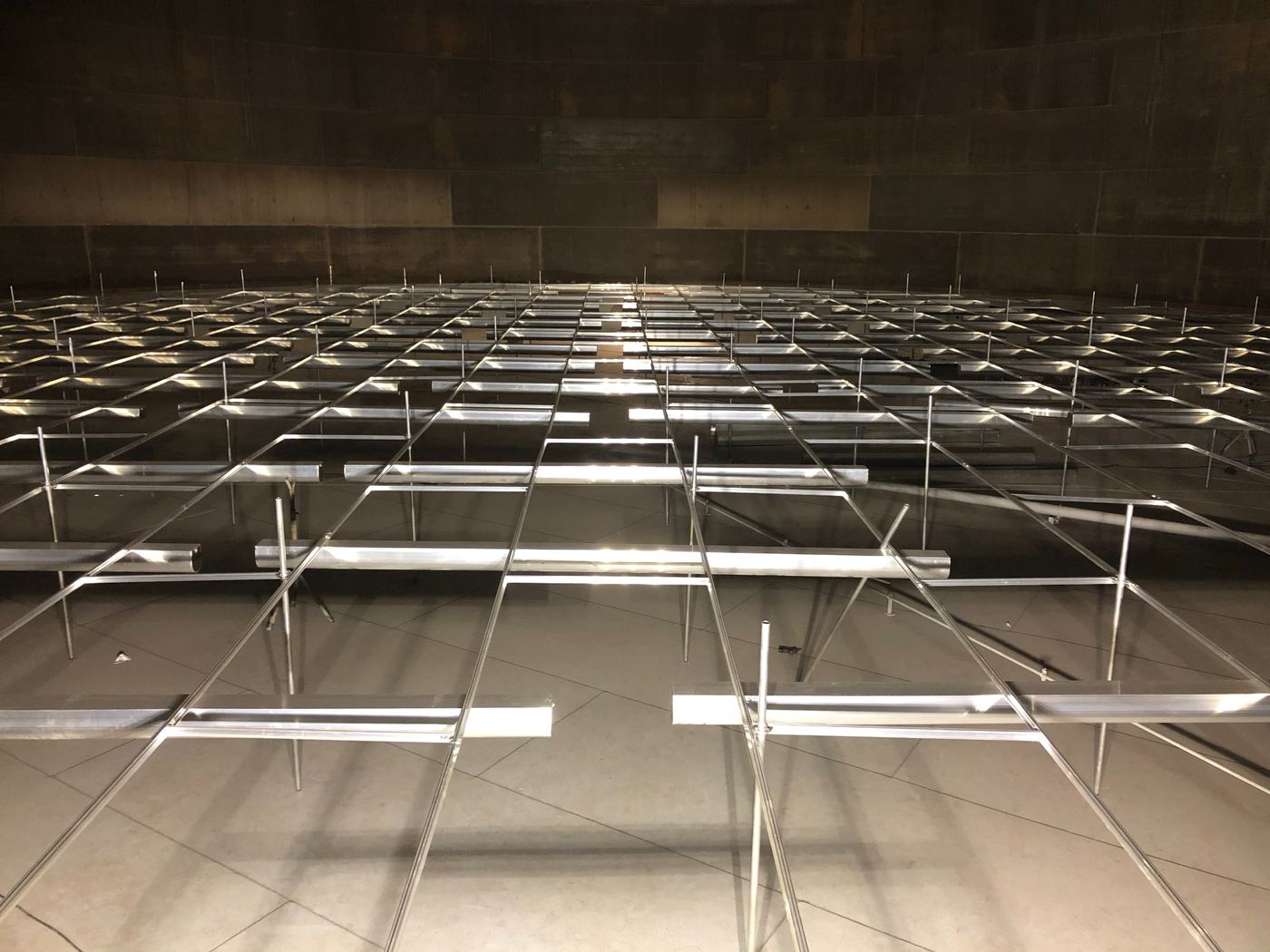
A non-contact IFR contains vapour that has already formed beneath the deck. Escaped vapour is replenished by evaporation from the liquid surface below, so deck seams, penetrations and the integrity of the vapour envelope have a different significance than on a true full-contact roof.
EZroof NC is not positioned as the cheapest way to place aluminium above a liquid. The structural frame, pontoon arrangement, deck skin, fittings and process conditions are engineered so that the roof remains stable and buoyant without depending on fragile assumptions.
These archive photographs show typical skin-and-pontoon construction and structural arrangements. EZroof NC is engineered from the actual tank geometry, process conditions and required buoyancy margin.
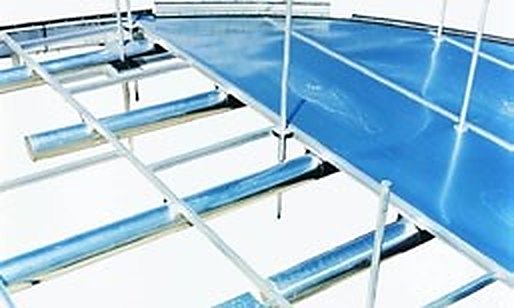
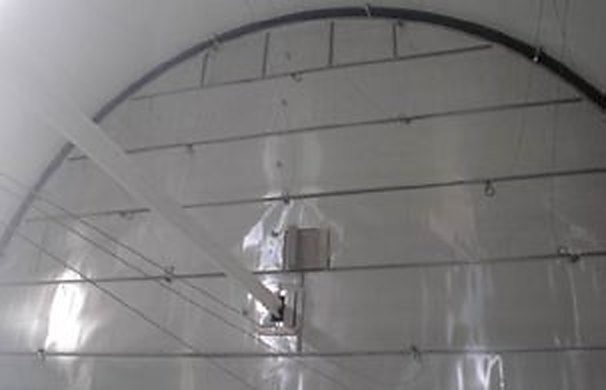
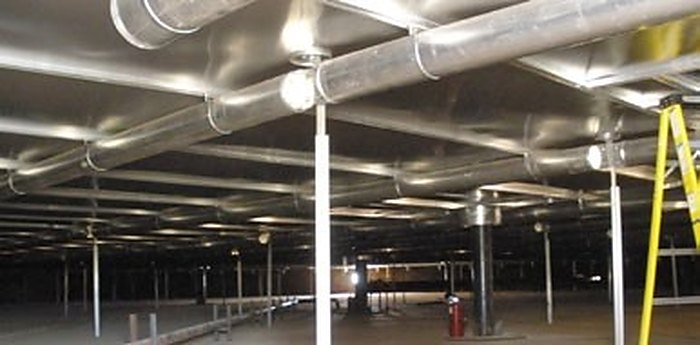
The deck support system is designed as a structural system rather than relying on pontoons to act as primary beams.
Pontoon size, spacing, compartmentalisation and local loads are checked for the complete operating configuration.
Deck skin, seams, penetrations and rim sealing are treated as a containment system.
Filling, pigging, mixers, gas slugs and inlet conditions are considered before the roof is released for service.
EZroof NC is engineered against the applicable internal-floating-roof requirements for the project, typically including API 650 Appendix H together with the relevant material, fire-protection and site standards.
Emission Zero can review the application before turning it into a product configuration or project specification.