Maintain shell contact
The working range is established from actual rim-space and shell-condition data.

Primary and secondary floating-roof rim seals
A modular seal family selected from the tank outward: primary mechanism first, secondary configuration second, with the combination matched to rim-space behaviour, roof type, product and operating envelope.
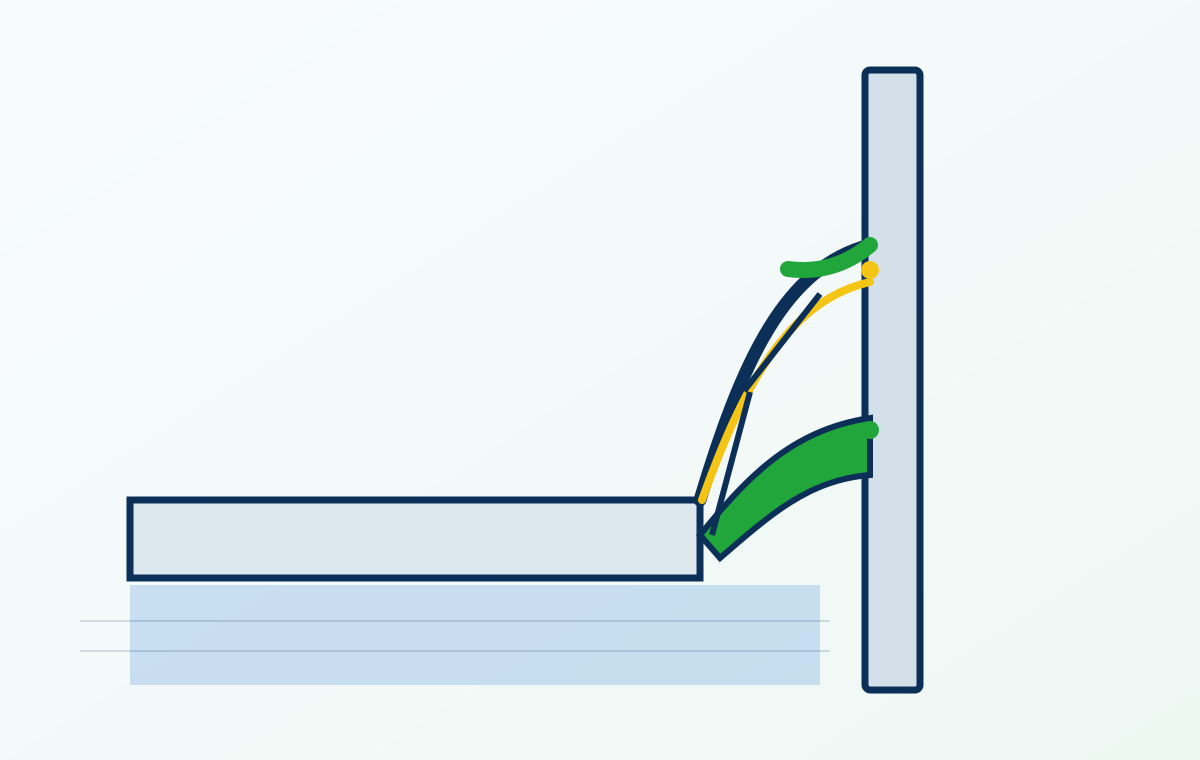
Seal performance depends on tank roundness, rim-space variation, shell welds and protrusions, product service, roof geometry and the condition in which the seal has to keep working. Selecting a seal from a brochure without understanding that geometry is the wrong order.
EZseal uses a simple coding system so the mechanical concept remains visible. The first letter identifies the primary seal. The second identifies the secondary seal. For example, EZseal SL is a shoe-plate primary combined with a low-profile secondary.
Archive photographs illustrate mechanical seal concepts and installed arrangements. Final EZseal geometry, materials and working range are determined from the tank survey and service.
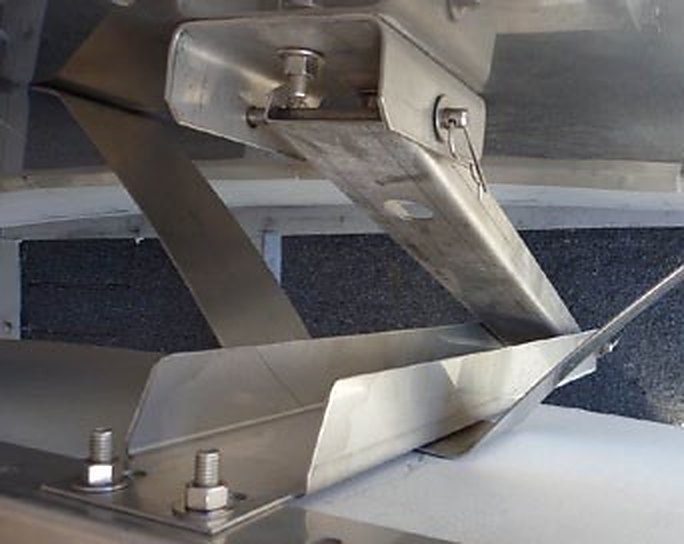
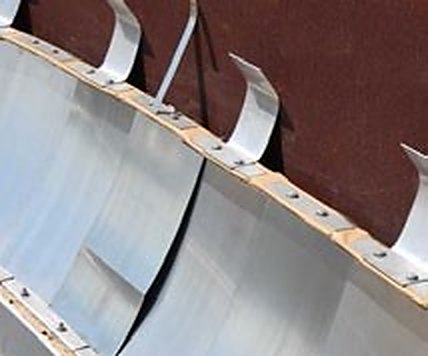
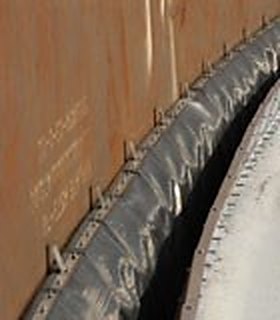
The working range is established from actual rim-space and shell-condition data.
Primary barrier, vapour barrier and secondary seal are treated as one emission-control system.
Welds, corrosion, shell deformation, wax and operational movement are considered in the detail.
Inspection access, wear points, replaceable elements and maintenance are considered at selection stage.
Click any code to open the configuration page.
| Primary ↓ / Secondary → | CCompression plate | LLow profile | WWindscreen |
|---|---|---|---|
| SShoe plate | EZseal SCShoe plate + Compression plate→ | EZseal SLShoe plate + Low profile→ | EZseal SWShoe plate + Windscreen→ |
| CCompression plate | EZseal CCCompression plate + Compression plate→ | EZseal CLCompression plate + Low profile→ | EZseal CWCompression plate + Windscreen→ |
| BBent sheet / compression shoe | EZseal BCBent sheet / compression shoe + Compression plate→ | EZseal BLBent sheet / compression shoe + Low profile→ | EZseal BWBent sheet / compression shoe + Windscreen→ |
| PPantograph | EZseal PCPantograph + Compression plate→ | EZseal PLPantograph + Low profile→ | EZseal PWPantograph + Windscreen→ |
The code identifies the mechanical family only. Final seal height, spring force, plate geometry, vapour barrier, wiper material, shell-contact detail and installation arrangement remain tank-specific.
The final seal configuration is checked against the tank design basis and applicable requirements for rim seals, emissions and fire safety. No two-letter configuration should be treated as automatically suitable for every tank.
Emission Zero can review the application before turning it into a product configuration or project specification.